

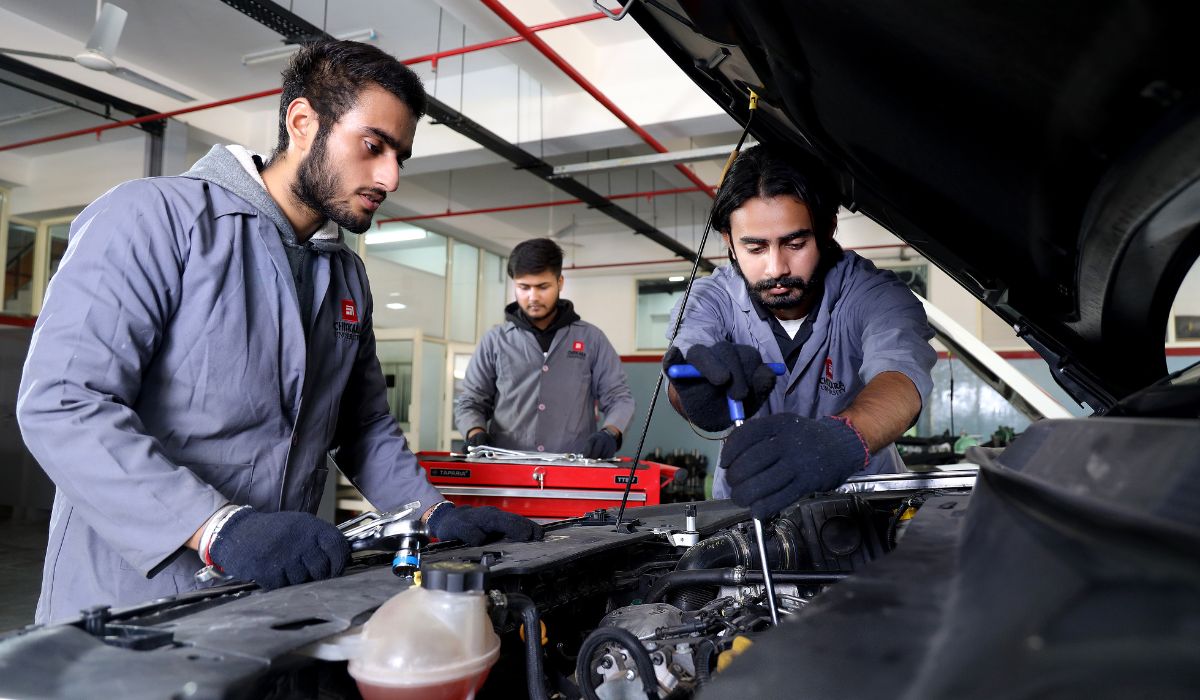
The auto repair industry is undergoing rapid technological evolution, fundamentally changing how shops operate, manage staff, and serve customers. From advanced diagnostics to cloud-based management systems, technology is driving efficiency, consistency, and customer satisfaction across multi-location auto repair businesses. Staying ahead of these trends is crucial for shop owners who want to remain competitive, optimize operations, and future-proof their business. Here are five key tech trends that are reshaping the auto repair industry.
1. Artificial Intelligence and Machine Learning
Artificial Intelligence (AI) and Machine Learning (ML) are revolutionizing diagnostics, predictive maintenance, and operational efficiency in auto repair shops. By analyzing large datasets, AI tools provide insights that were previously impossible to obtain manually.
Key Applications
- Predictive Maintenance: AI algorithms analyze vehicle data to forecast potential component failures before they become serious, reducing downtime and costly repairs.
- Enhanced Diagnostics: ML-powered systems can identify likely causes of complex issues by comparing current vehicle performance with historical data and repair trends.
- Workflow Optimization: AI tools help allocate technician assignments based on skill, availability, and workload, reducing bottlenecks and improving efficiency.
- Customer Experience: AI-driven recommendations allow shops to offer personalized service, proactively notifying customers about upcoming maintenance needs.
Real-Life Impact
Multi-location shops implementing AI report faster diagnostics, fewer repeat repairs, and improved service consistency. Technicians can rely on AI-driven insights to prioritize repairs accurately, minimizing trial-and-error procedures and improving customer satisfaction.
2. Connected Vehicles and Telematics
Connected vehicles generate a wealth of data that auto repair shops can leverage for smarter maintenance and proactive service. Vehicle telematics allows shops to monitor real-time performance metrics, from engine diagnostics to fuel efficiency.
Key Features
- Real-Time Data Access: Technicians can remotely access vehicle health information, enabling faster troubleshooting.
- Predictive Alerts: Connected cars can alert shops of emerging issues, allowing preventive interventions before a breakdown occurs.
- Fleet Management: For shops servicing commercial clients, telematics enable monitoring of entire fleets, scheduling maintenance, and reducing downtime.
Benefits
Connected vehicle integration enhances operational efficiency, reduces emergency repair costs, and allows shops to provide a proactive, data-driven service that builds customer trust.
3. Cloud-Based Shop Management Systems
Cloud technology has become a cornerstone of modern auto repair operations, particularly for businesses with multiple locations. Centralized, cloud-based platforms streamline scheduling, inventory, customer management, and reporting.
Core Advantages
- Centralized Operations: Manage multiple locations from a single interface, including technician schedules, appointments, and inventory levels.
- Real-Time Reporting: Access performance metrics instantly, allowing shop owners to make informed decisions and identify underperforming locations.
- Remote Accessibility: Managers and staff can access shop data from any device, improving flexibility and oversight.
- Automated Communication: Automated appointment reminders, service notifications, and follow-ups enhance customer engagement.
Industry Impact
Shops that adopt cloud-based management systems experience greater efficiency, reduced administrative errors, and improved coordination between locations, enabling scalable growth without sacrificing service quality.
4. Advanced Diagnostic Tools
Technological advances in diagnostics are transforming the way technicians identify and repair vehicle issues. Modern diagnostic tools integrate software, AI, and cloud databases to provide faster and more accurate analysis.
Capabilities
- OBD-II Scanners with AI Integration: Provide real-time insights and suggest probable causes of faults based on historical repair data.
- Mobile Diagnostic Platforms: Allow technicians to perform diagnostics using tablets or smartphones, improving flexibility and reducing shop floor congestion.
- Remote Diagnostics: Certain systems can analyze vehicle data remotely, allowing shops to prepare for repairs before the customer arrives.
Benefits
Advanced diagnostics increase repair accuracy, reduce service time, and minimize unnecessary parts replacement, enhancing both profitability and customer satisfaction.
5. Automation and Robotics
Automation is gradually entering auto repair workflows, from inventory management to actual repair tasks. While full automation of vehicle repair remains limited, many shops are using robotic and automated systems to enhance efficiency.
Key Applications
- Inventory Automation: Automated parts ordering systems track usage and predict demand, reducing overstock and shortages.
- Robotic Assistance: Certain high-precision tasks, such as tire alignment or engine component testing, are increasingly performed by automated systems.
- Process Automation: Scheduling, invoicing, and customer follow-ups can be handled by AI-powered software, freeing staff to focus on high-value tasks.
Impact
Automation reduces human error, optimizes resource allocation, and ensures standardized processes across locations, contributing to higher operational efficiency and consistent service delivery.
Integrating Technology into Multi-Location Operations
For multi-shop owners, integrating these technologies requires strategic planning:
- Assess Current Operations: Identify areas where AI, cloud systems, or automation can have the most impact.
- Invest in Staff Training: Technicians and managers must be proficient with new diagnostic tools, software, and automated systems.
- Centralize Data Management: Consolidate vehicle, customer, and inventory data to maximize the effectiveness of AI and analytics tools.
- Gradual Implementation: Roll out new technologies incrementally across locations to manage adoption challenges and ensure consistent performance.
- Monitor KPIs: Use performance metrics to measure ROI, operational efficiency, and customer satisfaction following technology integration.
Real-World Outcomes
Several multi-location shops have successfully leveraged these tech trends:
- Predictive Maintenance: Shops report fewer emergency repairs and higher customer satisfaction due to proactive servicing.
- Cloud Management: Businesses with centralized scheduling and inventory systems achieve faster turnaround times and more consistent service across locations.
- AI Diagnostics: Technicians reduce diagnostic time by up to 30%, increasing throughput and profitability.
- Connected Vehicle Monitoring: Fleet clients experience lower downtime and optimized maintenance schedules, boosting long-term contracts.
FAQ
Q: Are these tech trends suitable for small auto repair shops?
A: Yes, even smaller shops benefit from AI diagnostics, cloud management, and connected vehicle integration. Implementing these tools can improve efficiency, reduce errors, and enhance customer service.
Q: How can multi-location shops ensure consistency across all locations?
A: Cloud-based management systems, centralized KPIs, and standardized workflows help maintain uniform service quality, staffing efficiency, and customer experience.
Q: Does implementing AI or automation require replacing current equipment?
A: Not necessarily. Many AI and automation solutions integrate with existing diagnostic tools and shop management software. Some tasks may require upgrading or adding new hardware for full functionality.
Q: What is the ROI for adopting these technologies?
A: ROI varies depending on scale and implementation. Benefits typically include reduced repair errors, optimized staffing, lower inventory costs, faster service, and increased customer retention.
Q: How can connected vehicle technology improve customer relationships?
A: By providing proactive maintenance alerts, accurate service estimates, and personalized recommendations, shops can build trust, increase loyalty, and encourage repeat business.
Technology is reshaping the auto repair industry at a rapid pace. AI, machine learning, connected vehicles, cloud-based management, advanced diagnostics, and automation are enabling shops to operate more efficiently, provide higher-quality service, and enhance customer experience. For multi-location auto repair businesses, embracing these trends is essential for staying competitive, optimizing operations, and ensuring sustainable growth in a digitally-driven automotive landscape.
